
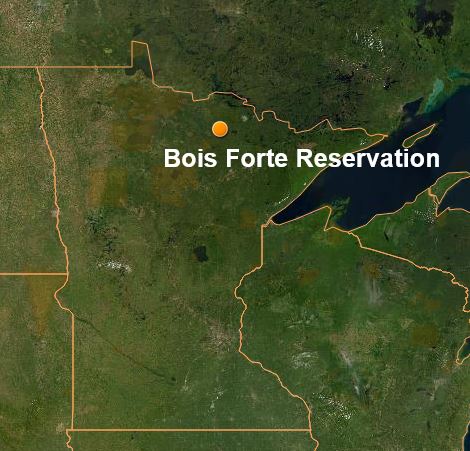
In 2020, Solar Commons Project researchers began forming community partnerships to build the second US Solar Commons. In this endeavor our aim has been to build a 500kW array hosted by our partner, solar manufacturing firm, Heliene, Inc., located in the rural, northern region of Minnesota.
Such a Solar Commons plant can reduce emissions by 6,500 metric tons and create around $70,000 a year for the social trust fund to support local beneficiary programs like those run by the Bois Forte Food Sovereignty Group (BFFSG). BFFSG builds local food systems for the Bois Forte Band of Chippewa community.
Solar Commons Project researchers are partnering with BFFSG to manage the project and are making a continuing effort to find sustainable funders for this “living lab” as a test site for the Solar Commons Toolkit digital dashboard, local governance, and trust protector standards work.
Foundational parts of building trust and partnerships for the Solar Commons included several activities: First, raising funds for and working with the BFFSG to gather information on food sovereignty needs and knowledge from community members through surveys, talking circles, and elder conversations. This community research provided us with a clear picture of the local needs and traditional skills and foodways that we want to support over time with the Solar Commons trust fund. This also supports the living lab work of co-designing the trust agreement and peer governance tools with BFFSG, and other indigenous anchor organizations.
Second, Solar Commons researchers have put together a legal team to serve local indigenous interests despite the limitations of typical ownership frameworks from settler society trust law. Treaty rights and indigenous values of the Bois Forte Band of Chippewa are specified in the Solar Commons trust agreement. Legal terminology from the common law of feudal England is carefully re-framed to protect treaty rights and the interests of the Bois Forte tribal community. Doug Thompson, attorney and Professor of tribal governance at University of Minnesota Duluth, has helped greatly leading this part of the project.
Third, the Solar Commons team gathered partners to design digital tools, including an online dashboard and database management software that our living lab co-designs and tests with BFFSG and indigenous anchor community groups. Peer governance of BFFSG’s social wealth fund includes indigenous beneficiaries, trustees, and trust protectors. These trust law functions we craft to work for the community’s aims over a 25-year period. To this end, we have been drawing up a general business plan for modes of serving the community’s food sovereignty needs, like a community kitchen.
General rules to allow the beneficiary community to govern assets and make changes as needed over time are being creatively and flexibly built into the trust agreement. The Solar Commons Trust Agreement is a tool for commoning in that way. Thus, as BFFSG defines what commoning is for their community, the living lab research team responds with design ideas and prototypes to test together over 3-year periods. These prototypes also serve as general frameworks for co-designing future Solar Commons projects in Minnesota.
Finally, in addition to preparing the cultural, ecological, legal, and computational groundwork for the Northland Solar Commons living lab, our researchers seek funding partners for the installation of a turn-key 500kW Solar Commons array. Our host partner Heliene, Inc. and our solar installer, Impact Power Solutions, work with our team of legal and engineering experts to put together the budget, timeline, and Solar Commons Donation Agreement that assures funders a secure investment in Solar Commons and the Bois Forte Band of Chippewa’s community health work.
The principles that guide Solar Commons research include repair of the world and tool-making for the gift economy. This project seeks support from those whose missions overlap with ours and with our community partners, empowering the indigenous peoples on treaty lands of Northern Minnesota. Interested parties may contact the Director of the Solar Commons Research Project, Prof. Kathryn Milun at 218-726-7071.